Healthcare App Development in 2026: Regulatory Lanes, Architecture, Cost, and What Ships First

The Question Every Healthcare App Starts With
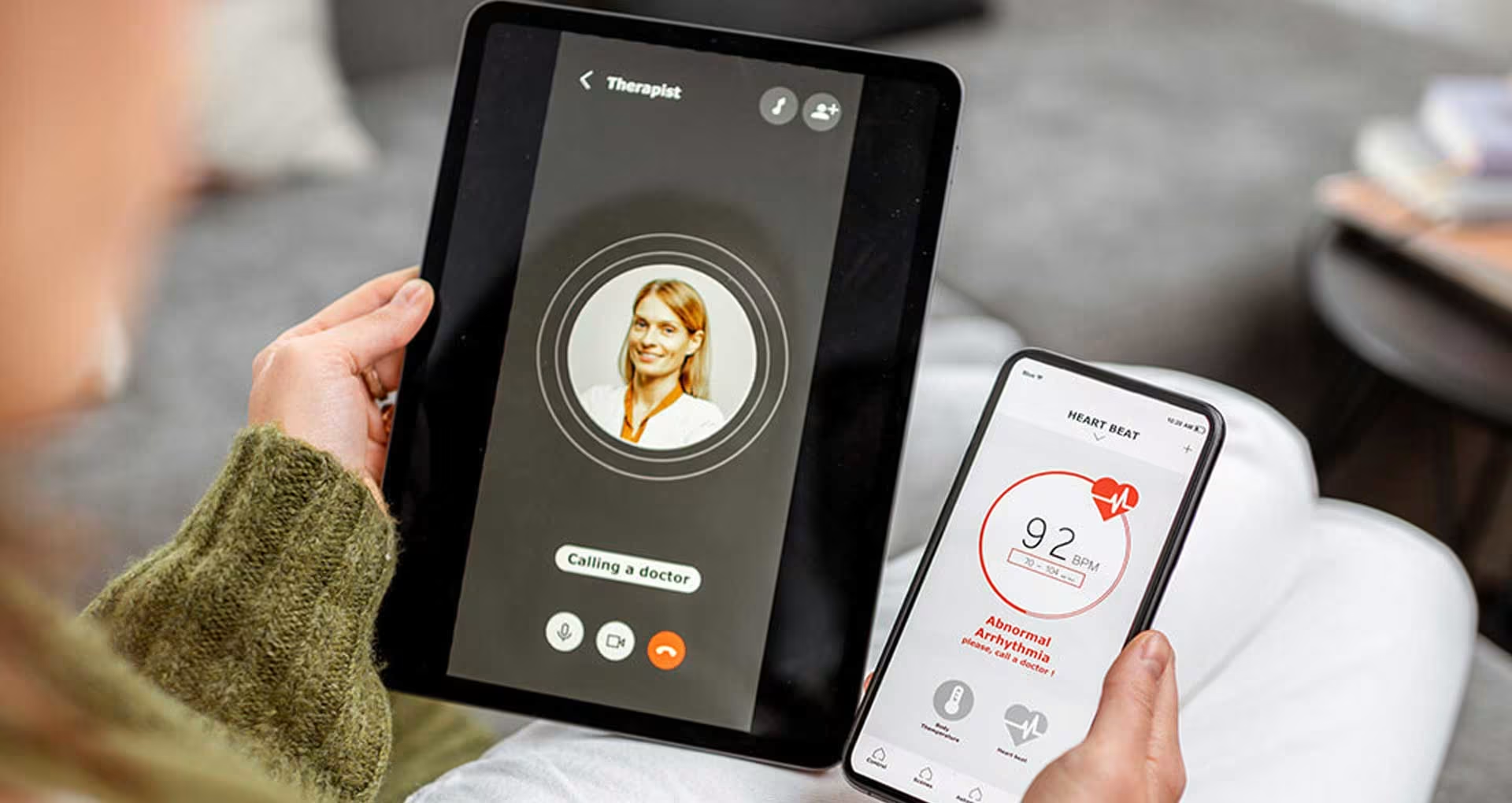
A patient in Mexico opens an app, picks a doctor, books a visit and pays in cash at an Oxxo convenience store. Before Hola Salud could take that first appointment it needed a patient app, a doctor portal, an admin backend and a pharmacy integration. That is the shape of healthcare app development: software that collects, stores or acts on health data, where the screen the patient sees is the smallest part of the build.
In the United States the build is shaped by three regulatory lanes, HIPAA, the FTC Health Breach Notification Rule and FDA device rules, and often by more than one. It is shaped just as much by the work of moving data in and out of electronic health records (EHR).
Key takeaways
- Decide which regulatory lane each data flow is in before the data model is fixed. The lane sets the vendor list and the launch checklist.
- Reading from an EHR is a scoped job under the Cures Act; writing back depends on each vendor and takes longer.
- Ship the narrowest complete loop first, then the second side, then the admin backend, then integrations, then AI.
- Our estimates: $40,000 to $100,000 for an MVP, $120,000 to $250,000 for a two-sided platform, $250,000 and up with EHR and AI.
Telemedicine use has settled below its 2021 peak. According to the National Center for Health Statistics (June 2026), 80.0% of office-based physicians used telemedicine in 2024, down from 86.5% in 2021, and 60.9% in non-metropolitan areas. The public data does not say which products clinics kept. On the patient side, CDC data for July to December 2022 shows 41.5% of adults had messaged a doctor’s office online and 46.1% had looked up test results.
Two in five adults had done so by 2022, so the buyers you meet in 2026 are likely to compare your product with a portal they already use. The question is what the new product does that the portal does not.
Our own estimate for a working first version is $40,000 to $100,000 and three to four months.
Types of Healthcare Apps, With the Builds Behind Them
These are the apps a patient uses to book, pay, see a clinician and get a prescription without leaving the screen. Telehealth, weight management and chronic-condition programs all fit here. When a clinic runs the app, HIPAA applies. Hola Salud is our example: a patient app, a doctor portal and an admin backend, with card payments through Stripe and cash through Oxxo stores.
Structured programs, self-guided content and an escalation path to a human. Sold directly to consumers, these usually fall under the FTC rule. For InnerPeak.AI we built a web and mobile platform for students and teachers with support available around the clock and resilience training.
Scheduling, clinical notes, e-prescribing, decision support and voice assistants that cut documentation time, sold to clinics and so under HIPAA through a BAA. Shift.AI, a voice companion for clinicians with memory across sessions, was a testable MVP in three weeks. (Three weeks sounds short for healthcare software. It was possible because the scope was one clinician workflow outside device regulation, and because a project manager staffed the team within days in the client’s time zone.)
This is the software a billing team or an IPA runs: claims processing, eligibility checks, provider credentialing and reporting. Claims data is PHI, so HIPAA applies. It is the least visible category, and the one where the client can usually count the hours saved. For InfiniHealth IPA we replaced a spreadsheet-based claims workflow with an automated processing platform.
Products for the people around the patient: family caregivers, support groups and care coordinators, usually sold to families and so under the FTC rule. Memini combines medical guidance, caregiving resources and a community in one dementia-support platform.
Companion apps for wearables and home devices. Since January 2026 the FDA treats some non-invasive wearables as general wellness products when they are marketed for wellness. That covers devices that estimate blood pressure, oxygen saturation or glucose, and it moves a whole class of companion apps out of device regulation.
Which Regulatory Lane Are You In?
The categories above tell you who the user is. The first decision on the build itself is which regulator you answer to, because it sets the data model, the vendor list and the launch checklist.
HIPAA covers protected health information (PHI) held by providers and their vendors. The FTC covers consumer health data outside that. The FDA applies on top of either when the software makes a clinical call. The table gives the short version and the notes below fill in the detail.
HIPAA in practice
A telehealth app run by a clinic, a patient portal or a claims system is covered, and so is any vendor that handles PHI on a covered entity’s behalf. Breach notification is due within 60 days. The stakes are not abstract. IBM’s Cost of a Data Breach Report 2026 (July 2026) puts the average healthcare breach at $6.64 million, still the highest of any industry. The Change Healthcare incident reached approximately 192.7 million individuals by HHS’s July 2025 count.
In December 2024 HHS published a proposed Security Rule update, the NPRM, which would make multi-factor authentication and encryption mandatory and add a written 72-hour restoration procedure. For a build team that means the login flow, the key management and the backup drill are compliance features from sprint one. The final rule has slipped to a mid-2027 target, so build to the proposal now.
FTC in practice
The rule defines a breach to include unauthorized disclosure, such as passing data to an advertising platform without permission. Consent flows and a data-sharing inventory are launch requirements. Notice to the FTC is required when 500 or more people are affected.
FDA in practice
Sepsis or stroke detection, automatic interventions and image analysis are device functions. Since January 2026, single-recommendation clinical decision support and non-invasive wellness wearables can fall outside device regulation when they meet the FDA’s criteria.
When lanes overlap
A weight-management app sold to employers may be a business associate under one contract and a consumer product under another. Decide the lane per data flow before the data model is fixed.
In our projects, retrofitting PHI segmentation after launch has been the most expensive change a client has asked for. The cost of a late decision shows up in the data model: when the lane gets decided after the data model, the rework costs more than the model did. Our HIPAA-compliant software development page covers how we draw that boundary.
Sources: HHS HIPAA Security Rule NPRM (December 2024), FTC final rule on the Health Breach Notification Rule (April 2024), FDA General Wellness guidance and FDA Clinical Decision Support guidance (both January 2026).
Interoperability: Getting Clinical Data In and Out
What the law requires
Most healthcare apps need data that lives in an EHR: problem lists, medications, lab results, appointments. Under the 21st Century Cures Act, certified EHR systems must expose a standardized FHIR R4 read API (Fast Healthcare Interoperability Resources, the current exchange standard). Pulling patient data into your app is therefore a scoped job: the API exists and its shape is known. Each vendor’s app approval, though, still runs on its own calendar.
Writing data back is at each vendor’s discretion and runs through their own programs. In our integrations the write half has been the larger part of the project. The mechanics, vendor differences and cost ranges are in EHR Integration: HL7 v2 vs FHIR R4, and the service itself on our EHR integration page.
Where enforcement stands
The regulator has started sending notices. At HIMSS26 in March 2026, the Assistant Secretary for Technology Policy confirmed that notices had gone out to certified health IT developers about API nonconformity. HHS had received more than 1,500 information-blocking complaints, and penalties run up to $1 million per violation.
Those are notices and complaints, not penalties paid, so the regulator is at least watching. A vendor that refuses reasonable read access is now taking a risk of its own, and your plan can start from the read API being there.
Three ways to connect
Plan for three connection patterns. “SMART on FHIR” launches your app inside the clinician’s EHR screen, so the clinician never leaves the chart to use it. A standalone FHIR client with “patient-mediated OAuth” means the patient signs in and grants your app access to their own records; this is the route for consumer apps. HL7 v2 feeds are the older channel, where a hospital pushes admit, discharge and transfer events (ADT) to you.
Scope each pattern per vendor: Epic, Oracle Health, athenahealth and the smaller vendors document their APIs differently and approve apps on different timelines.
Architecture That Survives an Audit
Classify each field at design time and keep PHI in its own services and storage, with separate access policies. A clear boundary shrinks your audit scope and lets marketing, analytics and support tools run on de-identified data.
Multi-factor authentication for workforce and clinician accounts, and role-based access with least privilege. Session controls have to fit clinical reality, such as a nurse who switches stations dozens of times a shift. The NPRM makes MFA mandatory with limited exceptions.
Log each access to a record, including reads, with the actor, the time and the purpose. Store the logs so they cannot be altered, for the retention period your lane requires. In the incidents we have supported, access logs were the first thing the investigator asked for.
Encrypt at rest and in transit by default. Manage keys in a cloud key management service with rotation, and never ship credentials inside a mobile build. The NPRM proposes encryption as a requirement rather than an addressable specification.
Each service that touches PHI (video, messaging, cloud, analytics, AI APIs) needs a business associate agreement and a place in your technology asset inventory. The NPRM proposes annual written verification of business associate safeguards, so the inventory has to stay current.
Backups tested against the 72-hour restoration target the NPRM proposes as a written procedure. For a clinic, a failed restore means a morning without the schedule, the notes or the prescriptions. Run the drill on a copy of production before an auditor or an outage asks you to.
AI in Healthcare Apps: What Ships Without Device Status
Under the revised CDS guidance, software that gives a single clinically appropriate recommendation, or a risk score, can qualify as non-device clinical decision support (CDS). The condition is that the clinician can review its basis and the decision is not time-critical. Sepsis alerts, stroke detection and image analysis remain devices.
Ambient note-taking, after-visit summaries and voice assistants for clinicians are outside device regulation when they do not drive a clinical decision on their own. Shift.AI is one example: a voice companion that supports the clinician’s own conversations, built on retrieval-augmented generation with conversation memory.
When a patient types a question about a symptom, the assistant answers only from content your clinical team approved and writes the exchange to the record. Anything that sounds like a diagnosis goes to a human. Under the FTC lane the transcript itself is health data, so it needs the same handling as the rest.
Under the General Wellness guidance, non-invasive sensing that estimates blood pressure, oxygen saturation or glucose can be marketed as wellness. The conditions: it is not intended to diagnose or treat, and it does not substitute for a cleared device. Values that mimic clinical measurements still need validation.
Model outputs sent to a third-party API are a PHI disclosure unless the vendor signs a BAA and you minimize the data. Prompt logs are records in their own right. Our healthcare AI practice starts with an evaluation set, built with a clinician who reviews the output, before any model touches production data.
Build Sequence: From MVP to a Platform
This is the sequence we used on Hola Salud and Shift.AI, and it starts well before the stack is chosen.
-
Decide the lane and the data flows. One page: who the users are, what data each screen touches, which lane each flow falls into, and which vendors see PHI. That page is your audit scope.
-
Ship the narrowest complete loop. For Hola Salud the loop was: patient registers, picks a doctor, books, pays, has the visit. The client needed to serve patients who pay in cash, so the app takes cards through Stripe and cash through Oxxo convenience stores.
The loop is also your answer to the portal question: it is the one thing a patient can do here that the existing portal does not let them do. Humberto Pedrero, CEO of Hola Salud, put this phase this way: “Plus8Soft saved us at the earliest stage. They prioritized tasks and allocated resources strategically.” -
Add the second side. A doctor portal that replaces the tools clinicians already juggle, with one dashboard for patients, schedule and online appointments.
-
Build the admin backend before scale. Approving doctors, batch-updating specialties, changing pricing and managing documents, all without an engineer.
-
Integrate. Pharmacies, labs, EHRs and payers, each as its own scoped project with its own vendor timeline.
-
Add AI to one workflow at a time. Pick the workflow, agree how you will judge the assistant’s answers, then build. Shift.AI started with a single workflow, the difficult conversation with a patient, plus an evaluation of the assistant’s answers agreed before the build.
If you want the first loop built to production standard from day one, our healthcare app development page describes how scoping and the first release work.
Tech Stack and Integration Choices
The lane, the integrations and who will maintain the code decide the stack. These are the patterns that have held up for us.
Mobile
Native Swift and Kotlin when the app talks to device hardware, Bluetooth peripherals, or HealthKit and Health Connect. React Native or Flutter when the product is forms, video and content and the team is small. Hola Salud shipped native iOS and Android with a Next.js web app and a Node.js backend on PostgreSQL. We compared the cross-platform options in React Native vs Flutter.
Backend and data
A relational database for clinical and billing records, with PHI tables isolated and encrypted. An event bus for ADT and appointment events. FHIR resources as the exchange format even when internal storage differs, and object storage for documents and imaging with per-object encryption.
Video, messaging, payments
Buy video and messaging from vendors that sign a BAA (Twilio, Vonage and their peers). Keep them behind your own API, so a vendor swap does not touch the clients. Payment processors such as Stripe operate under HIPAA’s payment-processing exemption rather than a BAA, so keep clinical details out of payment metadata.
Cloud and DevOps
AWS, Azure and Google Cloud all offer HIPAA-eligible services under a BAA. The eligible list is service-specific, so infrastructure-as-code should only provision from it. Secrets live in a managed vault, CI runs dependency and container scanning, and infrastructure changes are reviewed like code. The practices are the ones in our DevSecOps guide; in healthcare the pipeline’s own audit trail is evidence.
Observability
Logs and traces scrubbed of PHI before they reach a third-party monitoring tool, or a BAA with that tool. In the projects we have audited, PHI in logs has come up more often than any encryption gap.
Healthcare App Development Cost and Timeline
The ranges below are our own estimates for a senior blended team and align with our telemedicine cost breakdown. The figures you will find elsewhere are mostly agency estimates like this one, and they tend to cite each other. Treat any single figure, including ours, as the start of a scoped estimate.
What moves a project between rows is scope. The MVP assumes a minimal custom backend. The two-sided platform adds role-based access and analytics on de-identified data. The integrated tier adds claims integration, penetration testing, and SOC 2 or HITRUST readiness.
We plan 15 to 20 percent of the build cost per year for maintenance, monitoring and dependency updates. The same budget covers the compliance work the NPRM would require: annual penetration tests, six-month vulnerability scans and an inventory refresh. Onshore-only senior teams in the US or EU quote higher for the same scope. For a figure tied to your team composition, location and duration, use the project cost calculator.
Choosing a Healthcare Development Partner
A team that has shipped under HIPAA, under the FTC rule and under FDA scrutiny will ask about your data flows in the first call.
Ask to see a sample data-flow map, a BAA they have signed as a business associate, and how they scrub PHI from logs.
Ask which connections they already hold: EHR vendor app approvals, pharmacy and lab connections, payment providers with BAAs.
A dedicated team for a platform build, augmentation for a company with its own product leadership, full delivery for a founder without a technical team. Our healthcare development practice runs all three, and the Shift.AI example above shows what fast staffing in the client’s time zone looks like.
Named case studies with named clients. Where we could not name a client, we say so. We also published an analysis of the healthcare development companies a buyer is likely to shortlist, methodology included.
Common Mistakes in Healthcare App Development
Most direct-to-consumer health apps are under the FTC rule, where sharing data with an ad SDK counts as a breach. The usual version is HIPAA language in the privacy policy and no consent flow, which is the one thing the FTC lane demands.
Audit logs, PHI segmentation and vendor inventories bolted on in the last sprint cost multiples of building them in the first.
FHIR read access is mandated. Write access depends on each vendor’s program. Confirm the write program, sandbox access and approval timeline before you commit to a delivery date.
When pricing, specialties and provider approvals need an engineer, your operations stall while the engineer is on something else.
A model that answers well in a demo and unpredictably in production is a liability in healthcare. Agree the pass bar before the build and keep a human in the loop for anything near a clinical decision.
Crash reporters, analytics SDKs and monitoring agents receive full payloads unless you configure them otherwise. Scrub before sending or sign a BAA with the tool vendor. Regulators treat this as a disclosure.
What the Sequence Buys You
None of this makes a healthcare app cheap or quick, and the ranges above are our own estimates. What the sequence does is move three expensive decisions, lane, data flows and vendor list, into the weeks when they cost least. The screen the patient sees is still the smallest part of the build.
Healthcare App Development FAQ
By our estimates, $40,000 to $100,000 for a single-platform MVP and $120,000 to $250,000 for a two-sided platform with an admin backend. EHR integration and AI take a build to $250,000 to $400,000 or more. Plan 15 to 20 percent of the build cost per year for maintenance and compliance.
Three to four months for an MVP, and five to seven for a platform with two portals and integrations. Once EHR interfaces and AI features are included, plan seven to nine months or more. In our projects, EHR vendor approval timelines are the usual reason a schedule slips, so start them in parallel with the build.
Only if you are a covered entity or handle protected health information for one under a business associate agreement. A consumer wellness or symptom-tracking app without a provider relationship usually falls under the FTC Health Breach Notification Rule instead, which has its own 60-day notification and consent obligations.
HHS published a proposed Security Rule update (the NPRM) in December 2024. It would make multi-factor authentication, encryption, a technology asset inventory, annual penetration testing, six-month vulnerability scans and 72-hour restoration procedures mandatory, and would remove the addressable category. The final rule has slipped to a mid-2027 target. Build to the proposal now.
When it diagnoses, treats or drives a time-critical clinical decision: analyzing images, detecting sepsis or stroke, or triggering an intervention. The FDA’s January 2026 guidance leaves single-recommendation decision support and non-invasive wellness wearables outside device regulation when they meet its criteria.
Yes, with conditions. The API vendor must sign a business associate agreement if PHI is sent, and the data sent should be minimized. Prompts and outputs are logged as records, and anything that resembles a diagnosis needs a human review path. Build an evaluation set before production.
Through the FHIR R4 read APIs that certified EHRs must offer under the Cures Act, using SMART on FHIR for in-EHR launch or patient-mediated OAuth for standalone apps. Write access depends on each vendor’s program. The interoperability section above links to our guide with the vendor-by-vendor differences and timelines.