Telemedicine App Development Cost: The Honest Breakdown


Why Every Estimate You've Seen Is Different
A telemedicine app costs anywhere from $40,000 to $400,000 or more to build, and both ends of that range are honest numbers. Published agency estimates in 2026 genuinely disagree by a factor of ten, because they price different things: a single-platform patient app on rented video infrastructure sits at one end, a HIPAA-audited, multi-portal platform with EHR integration at the other. Quoting one number without saying what’s in the box is how budgets go wrong.
This guide does the opposite. It breaks down what each price tier actually includes, itemizes the compliance costs most guides wave at, and covers the number almost nobody puts in a cost article: what the platform costs to run each month after launch. For what goes into the build itself, component by component, see our guide to telemedicine software development. This one is about the money.
What a $40K Quote and a $400K Quote Each Buy
The 10x spread in published estimates comes down to four variables that vendors rarely spell out side by side.
Scope of “an app.” At the low end, the quote covers one patient-facing mobile app. At the high end, it covers the full system: patient app, provider portal, admin backend, and the integrations connecting them. The word “app” is doing very different work in those two sentences.
Infrastructure. Building on a vendor video API and managed cloud keeps the build cheap and moves cost into monthly fees. Building more of the stack yourself inverts that. Neither is wrong; they are different financial shapes for the same product.
Team rates. A $40,000 estimate usually assumes offshore rates; a $400,000 one usually assumes US or EU senior engineers. The same scope can carry either label depending on who builds it.
Compliance depth. “HIPAA-compliant” ranges from “we used a video API that offers a BAA” to “the architecture was designed for an OCR audit, with logging, access controls, and documentation to match.” The second one costs real engineering time, which is the next section.
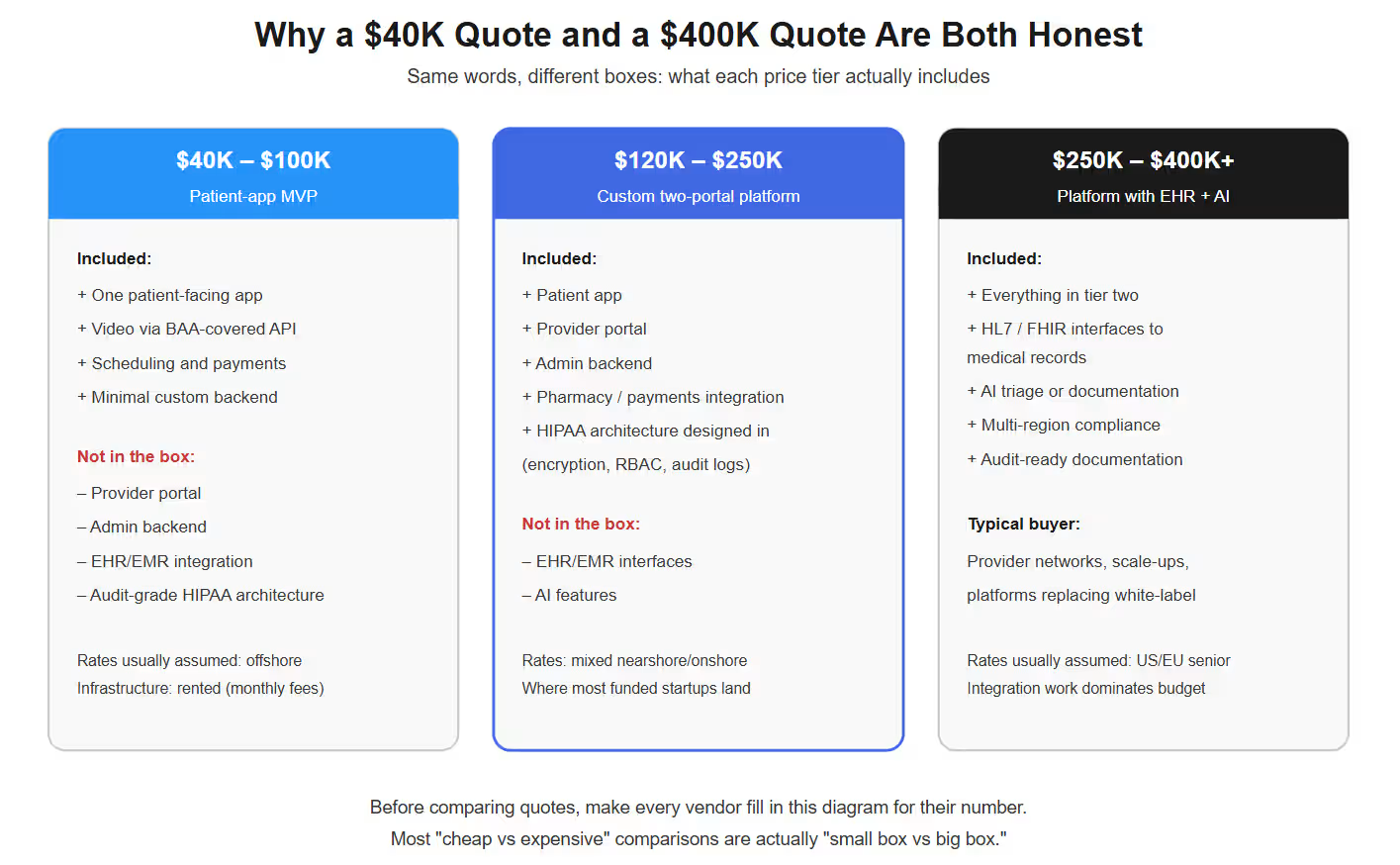
Three Realistic Budget Scenarios
Instead of one range, here are three configurations that actually get built, with what drives each budget.
Timelines follow the same shape: roughly 3 to 6 months for the first scenario, and longer as portals and integrations multiply. For a tailored number instead of a range, our project calculator takes about two minutes.
What HIPAA Actually Costs, Itemized
Most cost guides say compliance “adds cost” and stop there. The costs are specific enough to list.
BAA-gated infrastructure pricing. Every vendor that touches patient data needs a signed Business Associate Agreement, and vendors price that access. Whereby’s healthcare add-on runs $500 a month on top of usage; LiveKit offers a BAA only on its $500-a-month Scale tier or self-hosted deployments; Twilio gates its BAA behind enterprise plans. Vonage signs BAAs covering video, voice, and SMS under one agreement, and is explicit that compliance is a shared responsibility: the API being covered does not make your application compliant by itself.
Architecture work. Encryption in transit and at rest, role-based access control, audit logging on every record access, and the documentation an auditor will ask for. On a two-portal build this is real engineering time, not a checkbox, and it is the main reason scenario two costs more than scenario one.
What it buys. Under the current Security Rule’s tiered penalties, the annual maximum per violation category is over $2 million for uncorrected willful neglect. The compliance line items above are small against that denominator.
The Number Cost Guides Skip: What It Costs to Run
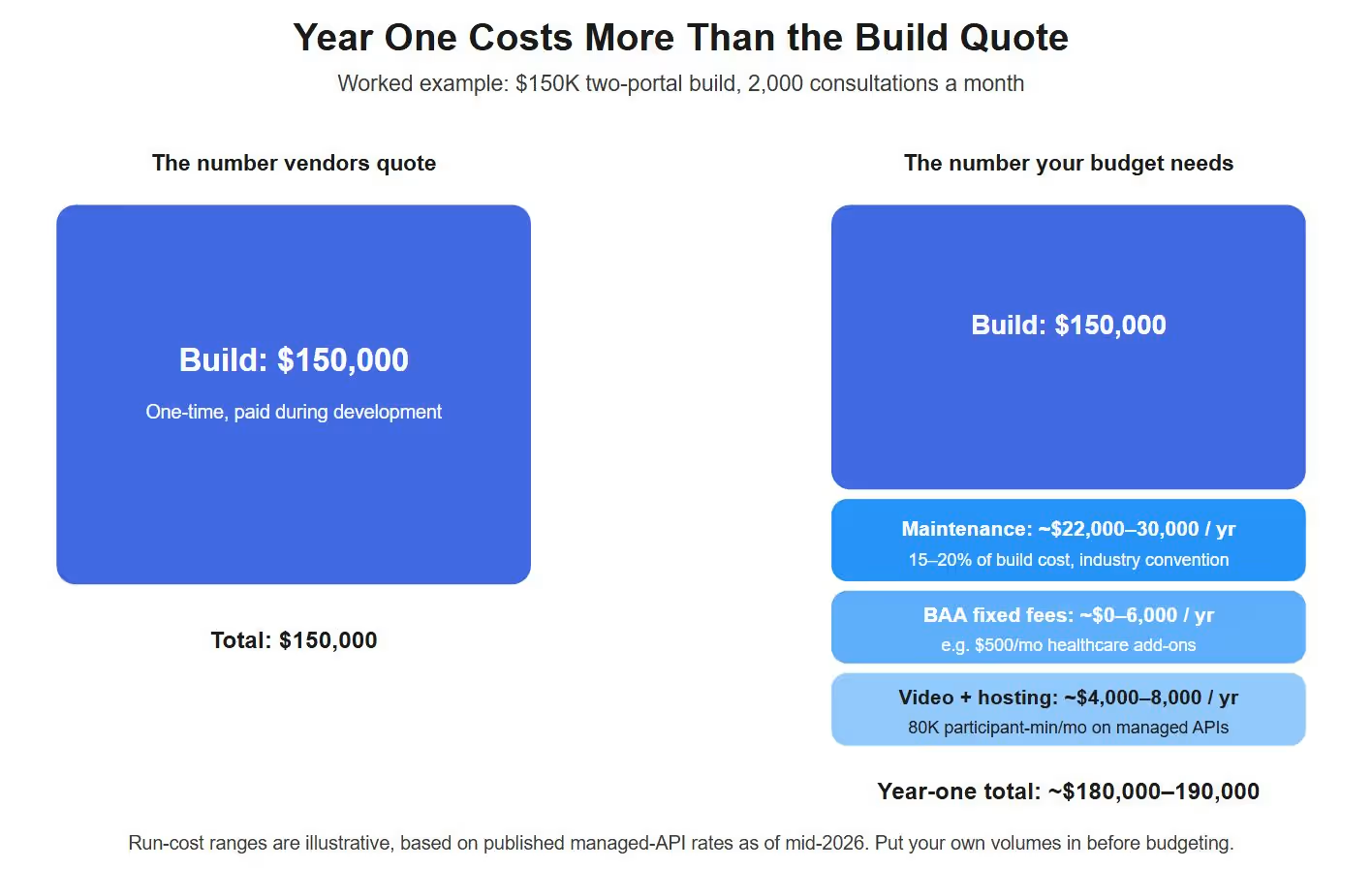
Build cost is one-time. Video infrastructure, hosting, and maintenance recur every month, and video is the line item that scales directly with usage.
Managed video APIs bill per participant-minute. As of mid-2026, AWS Chime SDK runs about $0.0017 per attendee-minute, with other managed providers in the fraction-of-a-cent range. The arithmetic is worth doing for your own volumes: a platform handling 2,000 consultations a month, averaging 20 minutes with two participants, generates 80,000 participant-minutes, which is roughly $136 a month on Chime’s published rate before recording or streaming add-ons. Video, in other words, is cheap at MVP scale, and the BAA-related fixed fees from the previous section often cost more than the minutes themselves.
The same source offers a useful threshold: self-hosting open-source video starts to pay off around 150,000 participant-minutes a month, and below that the operational cost of running TURN servers, scaling, and on-call outweighs the per-minute savings. For most platforms, that means managed first, and revisiting the decision only when usage data justifies it.
Beyond video: cloud hosting, monitoring, app store fees, and ongoing maintenance. A common planning convention is budgeting 15 to 20 percent of the build cost annually for maintenance and updates, which on a $150,000 build means $22,000 to $30,000 a year someone should put in the model on day one.
Where Budgets Actually Go Wrong
The Budget Nobody Plans: Paying for the App Twice
A meaningful share of “telemedicine app cost” budgets are not first builds. They are rebuilds: a white-label platform hit a wall on an integration the vendor never supported, or an MVP built for speed now needs the architecture its traction demands. The rebuild carries costs the first budget never saw, like migrating patient data without breaking continuity of care, and running two systems in parallel during the switch.
That risk is a scoping decision, not a surprise. If the care model, integrations, or compliance needs are the product’s differentiator, pricing the custom build honestly at the start is cheaper than paying for the white-label detour first. The build-approach comparison in our telemedicine development guide covers how to make that call.
One budget line that surprises US-focused teams expanding abroad: payments. On the Hola Salud platform we built for Mexico’s market, supporting cash-voucher payment through Oxxo alongside Stripe was a product requirement, not an afterthought, and cross-border payment scope belongs in the estimate from the start.
Common Budgeting Mistakes
A $60,000 quote for a patient app and a $250,000 quote for a full platform are not competing bids. Make vendors itemize what “the app” includes before comparing numbers.
HIPAA cost is line items, not a vague uplift: BAA-gated vendor fees, architecture work, audit documentation. Itemized, it can be planned; as a percentage, it gets cut.
Monthly video, hosting, and 15 to 20 percent annual maintenance belong in the initial model, not in a renegotiation six months after launch.
If a rebuild is plausible, the white-label option’s real cost includes migration. Sometimes it is still the right call, but only when priced honestly.
Frequently Asked Questions
From roughly $40,000 for a patient-app MVP on vendor video infrastructure to $400,000 or more for a multi-portal platform with EHR integration and AI features. The spread reflects scope, team rates, infrastructure choices, and compliance depth, not vendor dishonesty.
Most startups land in the $40,000-$120,000 range for a first release: one patient-facing platform, BAA-covered video API, scheduling and payments, with the provider portal and EHR integration phased in later as revenue justifies them.
Two kinds of cost: vendor fees gated behind BAAs (fixed fees like $500-a-month healthcare add-ons are common) and engineering time for encryption, access control, and audit logging. On a custom two-portal build, the architecture work is the larger of the two.
At MVP scale, often less than teams expect: managed video runs a fraction of a cent per participant-minute, so 2,000 consultations a month costs on the order of $150-$300 in video fees, plus hosting, BAA-related fixed fees, and maintenance typically budgeted at 15 to 20 percent of build cost annually.
Cheaper to launch, yes. Whether it is cheaper overall depends on the probability of a rebuild: if your product’s differentiator is a workflow or integration the vendor doesn’t support, the migration cost belongs in the comparison.
Roughly 3 to 6 months for a focused MVP, longer for multi-portal platforms with EHR integration. Timeline and budget scale together, driven by the same scope decisions.
Want a Number Instead of a Range?
Ranges are honest, but a budget needs a number. Our project calculator produces a tailored estimate in a couple of minutes, and our healthcare development team can turn it into a scoped proposal with the run costs included, so year one has no surprise lines.