Node.js Development Services
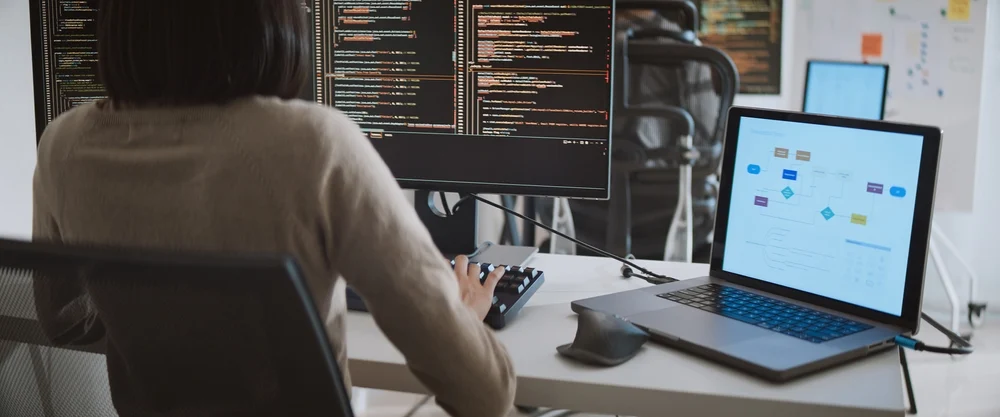
The Power of Event-Driven Scalability
Node.js has redefined back-end development by enabling non-blocking, event-driven architectures that handle thousands of concurrent connections with ease. It is the engine behind some of the world’s most responsive and data-intensive applications.
At Plus8Soft, we harness the full potential of the V8 engine to build systems that are not just fast, but efficiently scalable. Whether you are building a real-time collaboration tool, a high-frequency trading platform, or a microservices-based enterprise system, our experts architect solutions that maximize throughput and minimize latency, ensuring your digital infrastructure can grow without limits.
The Core Advantages of Node.js Development
Our Node.js Development Services















Our Case Studies

Digital healthcare platform for Mexico.
We built a complete healthcare ecosystem, including a patient app, a doctor’s portal, and an admin backend, with self-registration, appointment booking, medical records, and integrated Stripe and Oxxo payments.

Environmental compliance automation.
We built a RAG-based system that automates environmental assessment documents and regulatory templates, cutting preparation time by up to 90%.

AI-powered women’s health platform.
We developed an AI platform that turns elite health experts into digital twins and reviews years of patient data in under 60 seconds, delivering risk assessments up to 10x faster and cutting time-to-care from days to minutes.
Student mental wellness platform.
We developed a comprehensive web and mobile application that provides students and teachers with 24/7 personalized support and engaging resilience training to build essential life skills.
AI-driven recruitment automation platform.
We built an AI-powered recruitment system with automated pre-screening, real-time skills evaluation, and multi-stage verification that speeds up hiring by 94%.
Digital healthcare platform for Mexico.
We built a complete healthcare ecosystem, including a patient app, a doctor’s portal, and an admin backend, with self-registration, appointment booking, medical records, and integrated Stripe and Oxxo payments.
Environmental compliance automation.
We built a RAG-based system that automates environmental assessment documents and regulatory templates, cutting preparation time by up to 90%.
AI-powered women’s health platform.
We developed an AI platform that turns elite health experts into digital twins and reviews years of patient data in under 60 seconds, delivering risk assessments up to 10x faster and cutting time-to-care from days to minutes.
Student mental wellness platform.
We developed a comprehensive web and mobile application that provides students and teachers with 24/7 personalized support and engaging resilience training to build essential life skills.
AI-driven recruitment automation platform.
We built an AI-powered recruitment system with automated pre-screening, real-time skills evaluation, and multi-stage verification that speeds up hiring by 94%.
Flexible Developer Hiring Model
Why Plus8Soft?
Multiplied by AI
Transparency
Overdelivery